


There is a specific kind of magic that happens when the morning mist rises over the Rapti River. One moment, you’re sipping a warm coffee at Barahi Jungle Lodge, and the next, you’re hearing the distant, deep trumpet of an elephant or the alarm call of a spotted deer. Welcome to Chitwan, where the “wild” isn’t just something you see; it’s something you feel.
Formerly known as Royal Chitwan National Park, this UNESCO World Heritage Site is the crown jewel of the Terai Arc Landscape. It’s a place where luxury meets the untamed, and honestly? It’s even more fun than the documentaries make it look! Chitwan is a massive biodiversity hotspot, but if you’re looking for the “stars” of the show, look no further than the Big 6. These are the heavyweights that make every safari feel like a once-in-a-lifetime adventure.
1) Bengal Tiger
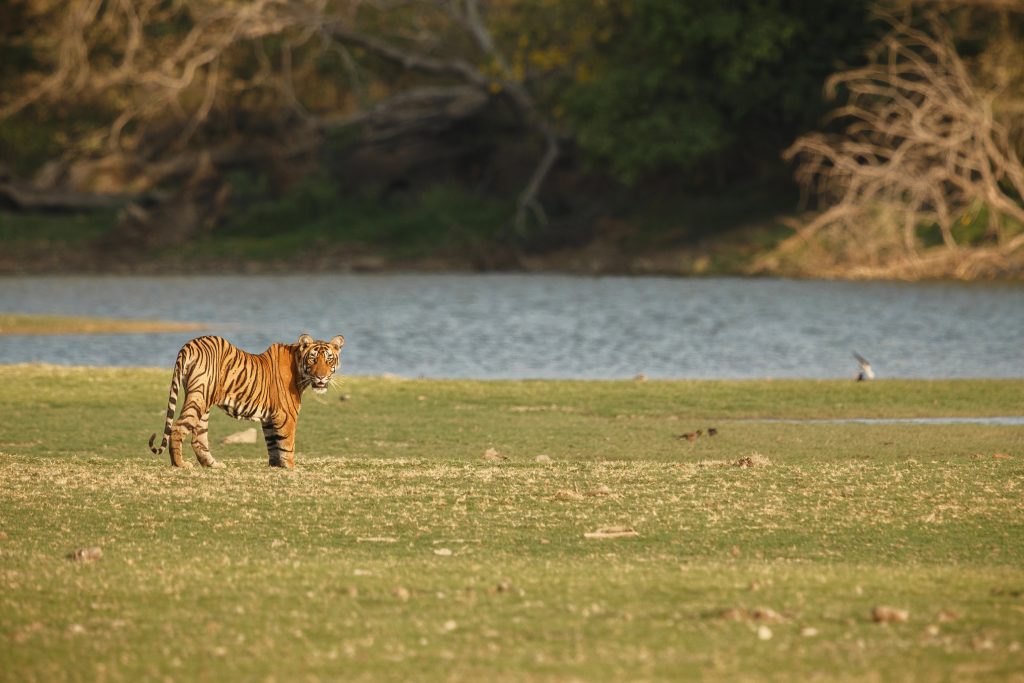
The “King” of the jungle. Listed as endangered on the IUCN Red List, the Bengal tiger is the ultimate prize for any wildlife enthusiast. Thanks to incredible tiger census efforts and strict anti-poaching patrols, Chitwan’s population is thriving. Keep your eyes peeled in the dense sal forest and tall grasslands; you might just see those iconic stripes melting into the shadows. If you are someone who wants to get a look at the Bengal Tiger, Chitwan National Park must be on top of your list to tick off.
- Habitat: Dense Sal forests, tall elephant grass, and areas near water holes.
- Status: Endangered (but populations are increasing in Nepal!).
- Conservation Efforts: Intensive monitoring, anti-poaching units, and the Terai Arc Landscape initiative.
2) Greater One-Horned Rhinoceros
Also known as the Indian rhinoceros, these prehistoric-looking giants are Chitwan’s greatest success story. Watching a Greater one-horned rhino graze near the floodplains is like stepping back in time. Thanks to buffer zones and community protection, Nepal’s rhino population is one of the healthiest in the world. Don’t be surprised if you spot one during your morning walk or evening stroll; they’re often around, quietly greeting passersby with their gentle presence.
- Key Feature: A single horn made of keratin and thick, armor-like skin folds.
- Best Spotting Areas: Near the Rapti River and marshy grasslands.
- Conservation Efforts: Translocation programs and strict community-based protection.
3) Leopard
While the clouded leopard roams the higher hills, the common leopard is the quiet “ghost” of Chitwan’s lowlands, shy, powerful, and perfectly camouflaged. Spotting one resting on a tree is rare, a fleeting moment that feels almost personal. With expert guidance and a bit of luck, the sight can be truly majestic.
- Behavior: Solitary and nocturnal; they are incredible climbers.
- Sightings: Rare and elusive; most active at dusk and dawn.
- Conservation Efforts: Protected through a blend of technology and community efforts, including mesh fencing, wildlife corridors, light deterrents, and camera monitoring.
4) Sloth Bear
Imagine a shaggy, black-coated bear with a long snout, vacuuming up termites like it’s at a buffet—that’s the sloth bear. Quirky, a little clumsy, and full of character, they’re easily one of the most entertaining animals to spot on a late-afternoon safari. In Chitwan National Park, sloth bears thrive across mixed forests, grasslands, and floodplains.
- Feeding Habits: Termites, ants, fruits, and honey.
- Sightings: Rare but memorable, mostly in quieter hours; the park supports 200–250 individuals.
- Conservation Efforts: Protected through habitat conservation, monitoring via camera traps, and ongoing efforts to reduce human-wildlife conflict.
5) Gaur
Meet the world’s largest wild cattle! The Gaur (or Indian Bison) is a muscular marvel. These gentle giants play a huge role in the ecosystem by keeping the grasslands in check. Seeing a massive male that can weigh over 1,500 kg is a humbling experience that reminds you who really runs the jungle. They are social animals, often found in small herds led by a dominant female.
- Appearance: Distinctive white “socks” on their legs and massive, curved horns.
- Habitat: Primarily hilly terrain and dry deciduous forests.
- Conservation Efforts: Habitat protection measures to ensure plenty of grazing space away from human settlements.
6) Asian Elephant
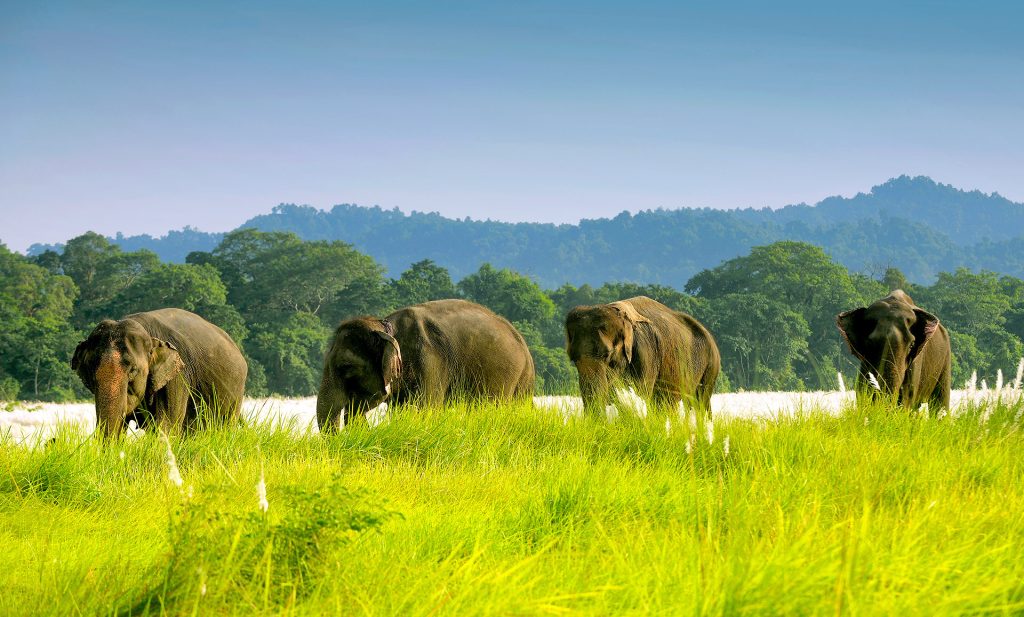
Whether it’s a lone bull or a family herd moving through elephant corridors, the Asian elephant is the soul of the Chitwan National Park. While you’ll see domesticated elephants in the villages, the wild ones are magnificent to watch from a distance as they knock over trees like they’re toothpicks! They are highly intelligent and play a vital role in creating paths through the thick jungle for other animals.
- Social Life: Led by a matriarch (the oldest female) in tight-knit family groups.
- Conservation: Protection of traditional migration routes and “corridors” that connect different parks in Nepal and India.
Other Fascinating Animals in Chitwan National Park
The Big 6 might get the billboard fame, but the supporting cast is just as spectacular. If you’re looking for the top wild animals found in Chitwan National Park in Nepali terms, you’ll hear locals talk fondly about the Arna (wild water buffalo) or the graceful Chital.
Big Cats & Rare Mammals
Beyond the famous tigers, Chitwan is one of the few places on Earth where six different species of wild cats coexist.
- Clouded Leopard: Once thought to be extinct in Nepal, these stunning cats were recently rediscovered in the park! With their large “cloud” spots and tree-climbing skills, they are the true ninjas of the jungle.
- Fishing Cat: A cat that loves to swim! You’ll find them near the wetlands and fishponds of the buffer zones. They are roughly twice the size of a house cat and are expert hunters of fish and frogs.
- Indian Pangolin: This rare, scaly mammal looks like a walking pinecone! It’s one of the most unique creatures in the park, spending its nights digging for ants and termites with its powerful claws.
Herbivores Commonly Spotted
You won’t have to look far to see the “Bambis” of Nepal. These herbivores keep the jungle thriving and the predators fed.
- Spotted Deer (Chital): The most beautiful and common deer in the park. With their bright white spots and elegant antlers, they are a photographer’s dream, often found in large, social herds.
- Sambar Deer: The largest deer species in Asia. They are mostly nocturnal and prefer the deep cover of the forest, only emerging at dusk to feed near the water.
- Hog Deer & Barking Deer: The Hog deer gets its name from its pig-like habit of running through the grass with its head down. The Barking deer (Muntjac) is the smallest of the bunch and actually “barks” like a dog when it senses danger!
- Wild Boar: Always busy and full of energy! These sturdy animals are fun to watch as they root through the mud and grass for tubers and roots.
Monkeys in Chitwan National Park
You can’t have a jungle adventure without some monkey business! Chitwan is home to two very different primate personalities:
- Rhesus Macaque: The bold, brownish-red monkeys you’ll often see near park entrances and villages. They live in large “troops” and are famous for their expressive faces and cheeky behavior.
- Gray Langur: The “gentlemen” of the forest. These elegant, silver-gray monkeys have black faces and incredibly long tails. You’ll see them leaping through the high canopy with Olympic-level grace, often letting out loud “whoops” to communicate.
Reptiles & Aquatic Life of Chitwan: A Prehistoric World
The adventure doesn’t stop at the shoreline! The Rapti River and Narayani River serve as the lifeblood of the park, creating a vibrant underwater world that feels like a scene straight out of Jurassic Park.
Gharial Crocodile
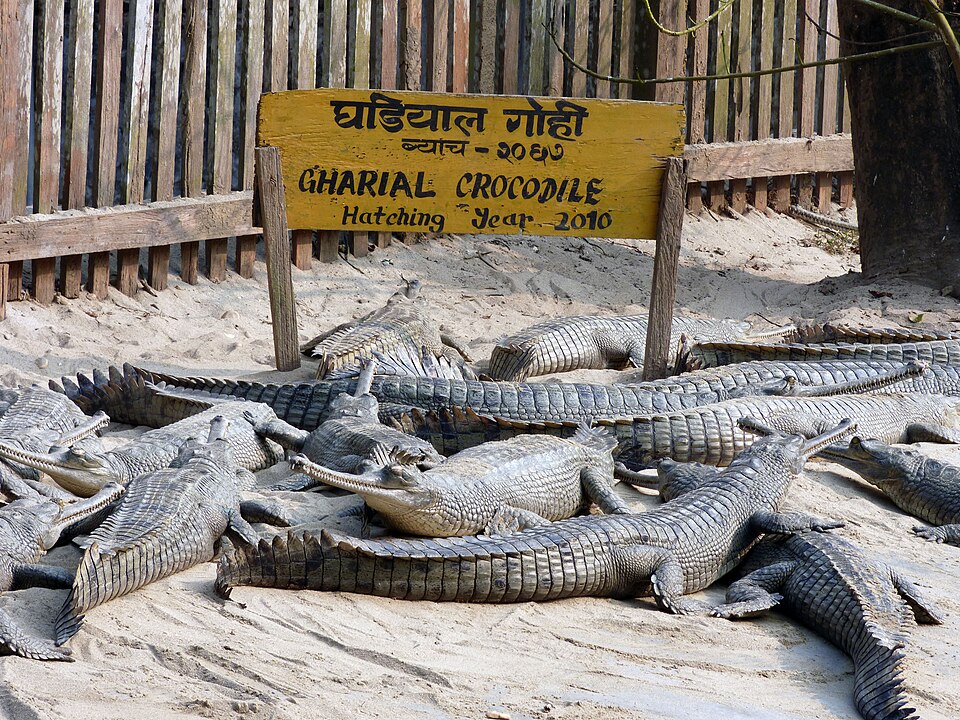
Meet one of the rarest and most unique creatures on the planet. With its long, pencil-thin snout and specialized fish-eating habits, the Gharial crocodile is a true relic of the dinosaur age. In Chitwan, conservation is in full swing over 250 captive-raised gharials were recently released into the Rapti River to help bolster their numbers in the wild!
- Key Feature: A distinctively slender snout; males develop a “Ghara” (a bulbous growth) at the end of their nose.
- Habitat: Fast-flowing, deep rivers with high sandbanks for basking.
- Conservation: You can visit the Gharial Crocodile Breeding Centre in Kasara to see how these “living fossils” are being saved from extinction.
Mugger Crocodile
If the Gharial is the specialist, the Mugger crocodile is the “tough guy.” These broad-snouted ambush predators are incredibly versatile; they can walk for miles on land and are even known to use “tools” like sticks to lure birds! They are the rulers of the marshes and slow-moving river bends.
- Diet: Opportunistic hunters that eat fish, birds, and even small mammals like deer.
- Fun Fact: Unlike most reptiles, Muggers are surprisingly intelligent and have been observed building underwater burrows to escape the midday heat.
- Sightings: Common on the banks of the Narayani River, especially during the winter when they bask in the sun.
Gangetic Dolphin
If you’re very lucky, you might see a shadow break the surface of the river. The Gangetic dolphin is one of the world’s few freshwater dolphin species. Once thought to be extinct in the Narayani, photographic evidence recently confirmed their return—a huge win for biodiversity in Nepal!
- Behavior: Nearly blind, they navigate the murky river waters using sophisticated echolocation.
- Spotting Tip: Look for them at Golaghat, the picturesque confluence where the Rapti and Narayani rivers meet.
King Cobra
The jungle’s most regal and feared resident. The King cobra is the world’s longest venomous snake, reaching lengths of up to 18 feet! While they are very shy and prefer to avoid humans, seeing one glide through the leaf litter is an experience that will stay with you forever.
- Personality: They are the only snakes in the world that build nests for their eggs and guard them fiercely.
- Diet: Their scientific name, Ophiophagus, literally means “snake-eater”—they primarily hunt other snakes!
Monitor Lizard
Looking like a miniature dragon, the monitor lizard is a common sight scurrying across the jungle floor or sunning itself on a log. These lizards are powerful, fast, and highly intelligent predators that aren’t afraid of a fight.
- Skills: They are fantastic swimmers, agile climbers, and can run surprisingly fast on land.
- Sightings: Often spotted near riverbanks or the edges of the sal forest.
Birdlife: A Paradise for Birdwatchers
If you think the ground is exciting, wait until you look up! Chitwan National Park is a globally recognized Important Bird Area (IBA) and home to about 652 species—that’s nearly 70% of all bird species found in Nepal! Whether you’re a serious “birder” or just someone who loves a splash of color, this park is basically a giant, open-air theater.
Bengal Florican
This is the “Holy Grail” for birdwatchers. The Bengal florican is a critically endangered bustard, and Chitwan’s grasslands are one of its last remaining strongholds.
- The Show: During the breeding season, the males perform a spectacular “jumping” dance—leaping high above the tall elephant grass to show off their black-and-white plumage.
- Status: Extremely rare. Seeing one is a “stop-the-jeep” moment!
Great Hornbill
Known as the “Farmer of the Forest,” the Great hornbill is a magnificent bird with a massive yellow and black “casque” (helmet) on its beak.
- The Sound: Their wings are so large that they make a loud “whoosh-whoosh” sound as they fly, which can be heard from half a mile away!
- Fun Fact: They have a beautiful, romantic side—they are known for being incredibly loyal partners and can live up to 40 years.
Sarus Crane
Standing at nearly 6 feet tall, the Sarus crane is the world’s tallest flying bird. They are the elegant giants of the wetlands, easily recognized by their light gray bodies and striking red heads.
- Symbolism: In local culture, they are symbols of marital fidelity because they mate for life.
- Where to see them: Look for them in the open wetlands and seasonally flooded grasslands near the park’s edge.
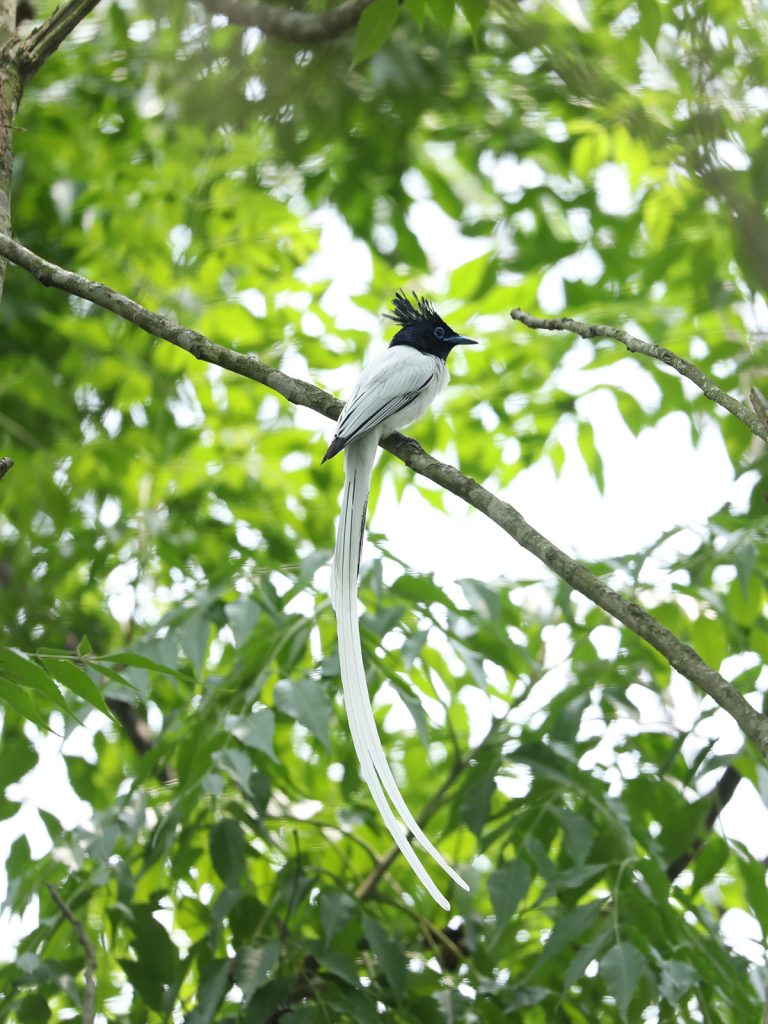
Asian Paradise Flycatcher
This bird looks like it flew straight out of a fairy tale. The Paradise flycatcher is a fan favorite for its incredible beauty and “vogue-ready” looks.
- The Look: The males have ridiculously long, ribbon-like tail feathers that trail behind them like a royal cape as they fly through the trees.
- Color Morphs: You might see them in two “outfits”—a fiery rufous (reddish-brown) or a ghost-like snowy white.
How to See These Wild Animals in Chitwan
Ready to trade your screen for the green? Exploring Chitwan is like being the main character in your own adventure movie. Here’s how you can jump into the action:
- Jeep Safari – The Classic Adventure: This is the best way to cover ground and head deep into the subtropical forest. It’s bumpy, it’s dusty, and it’s a total blast! Plus, our expert drivers know exactly where the cool kids (the tigers) like to hang out.
- Canoeing on the Rapti River – Zen Mode: Drift silently in a traditional hand-carved boat. It’s the perfect way to see crocodiles at eye level (don’t worry, you’re totally safe!) and catch the Gangetic dolphin playing in the waves.
- Jungle Walks – For the Brave Souls: Want to feel the crunch of leaves under your boots? A walk with our trained nature guides lets you track paw prints and learn the secret language of the forest. It’s intimate, exciting, and 100% immersive.
- Bird Watching Tours – Color Therapy: Start your morning with a peaceful stroll. With the mist rising and the birds singing, it’s the ultimate way to soak in the vibrant colors of the jungle before the rest of the world wakes up.
Best Time to Visit for Wildlife Spotting
Best Time to visit for Chitwan:
- October to March (The Golden Window): The weather is literally perfect—think sunny days and cozy, cool nights. The skies are clear, making it prime time for rhino spotting.
- April & May (Tiger Time): It gets a little toasty, but this is the secret season for tiger tracking. Why? Because the tall grass is shorter and the animals gather around the water holes to cool off, just like us at the pool!
- A Note on the Monsoon (June–September): The rain brings the jungle to life! While monsoon flooding can make some paths tricky, it’s a beautiful time for those who love lush, vibrant greenery and fewer crowds.
Conservation & Ecotourism in Chitwan
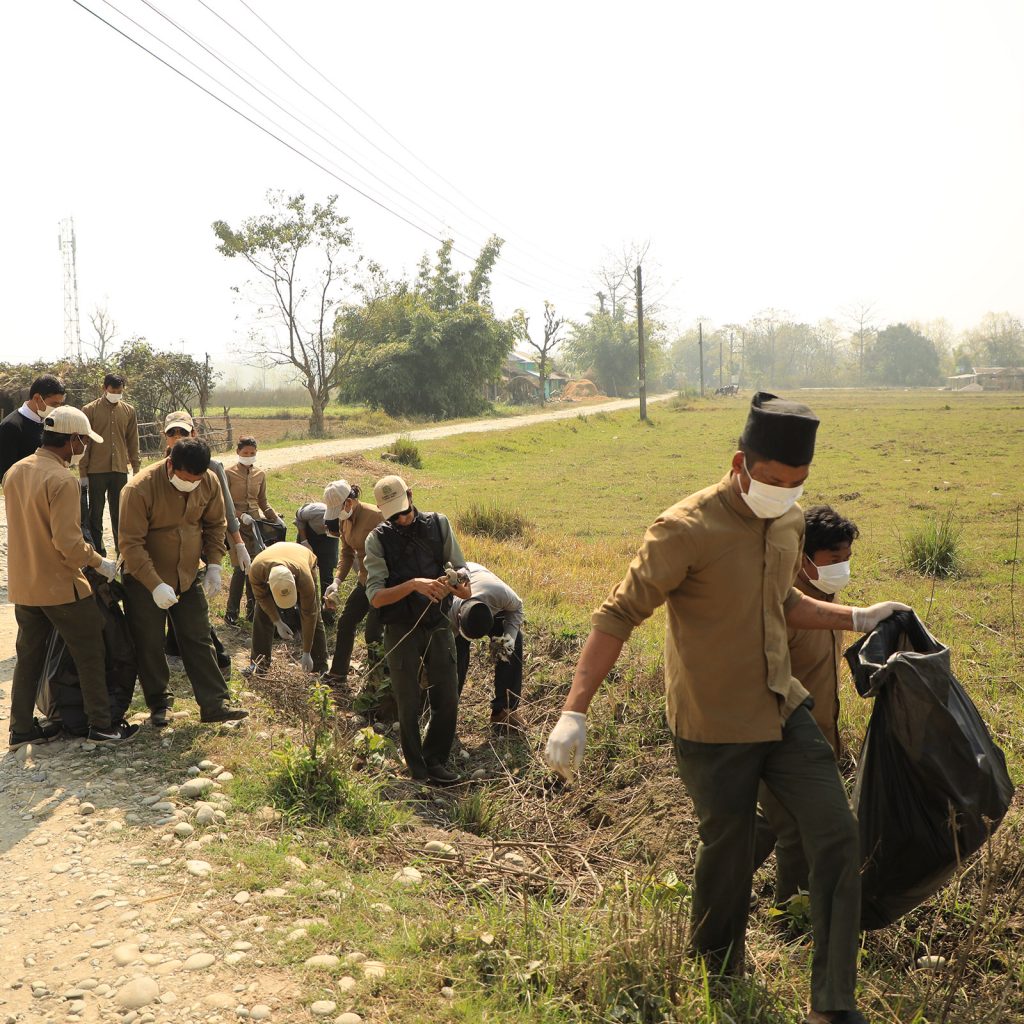
At Hotel Barahi, we truly believe the jungle belongs to the animals. Sustainable ecotourism isn’t just a buzzword for us; it’s our way of life. Your stay helps fund habitat protection, supports anti-poaching strategies, and empowers the local Tharu culture.
When you visit, you aren’t just a guest; you’re a partner in protecting one of the world’s most vital biodiversity hotspots. It’s travel that feels as good as it looks!
Where to Stay: Book a Jungle Lodge in Chitwan
If you want to experience the wild without sacrificing an ounce of luxury, you’ve found your home. Barahi Jungle Lodge sits right on the edge of the park area, offering you a front-row seat to nature’s greatest show.
Imagine this: you spend your day tracking tigers and rhinos, and you finish it by diving into a refreshing pool, followed by a gourmet dinner featuring authentic Nepalese cuisine. From our visitor center experiences to our boutique rooms that feel like a warm hug, we provide the kind of hospitality that makes you feel like family.
Ready to find your wild? Book your jungle escape at Barahi Jungle Lodge today!