


Nestled where the Himalayan foothills meet the lowlands, Chitwan National Park serves as a vital ecological bridge between Southern Nepal and Northern India. As the centerpiece of the Terai Arc Landscape, it functions less like a fenced-in park and more like a fluid corridor, allowing wildlife to migrate across international borders. By linking protected areas like Nepal’s Chitwan with India’s Valmiki Tiger Reserve, it maintains the genetic health of tigers and rhinos, proving that conservation works best when nature is treated as a single, connected habitat rather than a series of isolated pockets.
Wildlife Corridor Between Nepal & India
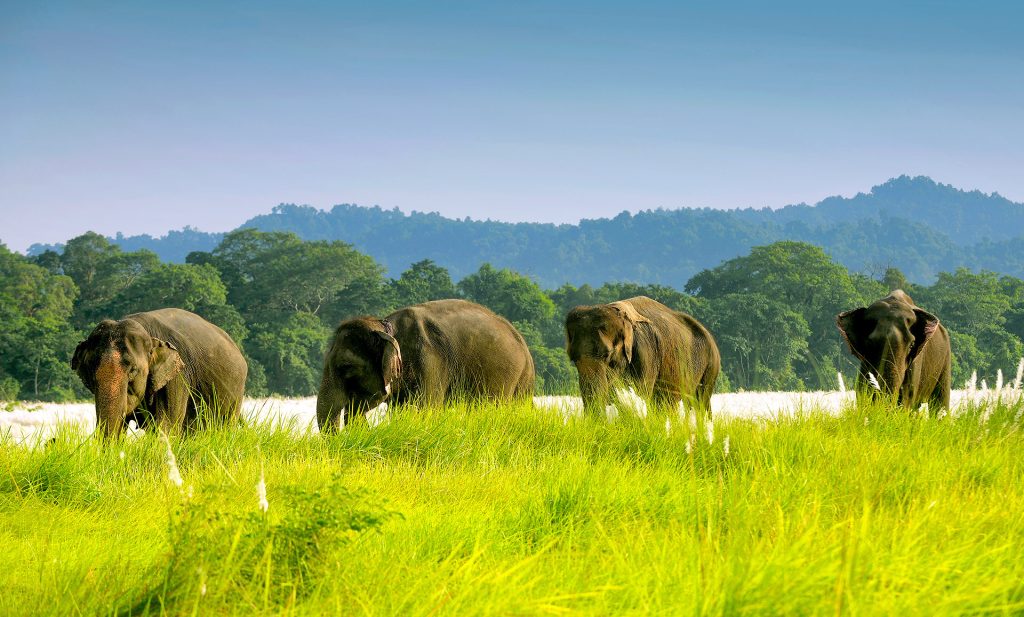
The ecology of Chitwan is inextricably linked to the wilderness of Northern India, forming a seamless trans-boundary landscape with India’s Valmiki Tiger Reserve. This “porous border” is essential for the survival of the region’s megafauna; it creates wildlife corridors that allow Asian elephants and Royal Bengal tigers to migrate naturally, preventing genetic isolation and ensuring population resilience. This connectivity is supported by a “shared shield” of diplomatic cooperation, where Nepal and India align on anti-poaching strategies and rhino translocation programs. By treating the Terai as a single habitat rather than two separate countries, these efforts turn a political boundary into one of the world’s most successful survival routes.
Chitwan National Park at a Glance
If you are looking for the foundational facts about Chitwan National Park, it is important to understand its status as a pioneer of conservation in Asia. Here is a quick breakdown of its history and geography:
- Nepal’s First National Park: Established in 1973 (2030 B.S. in the Nepali calendar), it was the country’s first protected area.
- UNESCO Recognition: Due to its incredible biodiversity, it was officially declared a UNESCO World Heritage Site in 1984.
- Prime Location: It is nestled in the Terai region of southern Nepal, sitting at the base of the rugged Siwalik hills.
- Lush Waterways: The park’s lifeblood comes from its major river systems, the Rapti River and the Narayani River.
- Diverse Ecosystems: The landscape is a rich mosaic consisting of dense sal forest, lush riverine forests, sweeping grasslands, and fertile floodplains.
What Is Chitwan National Park Famous For?
Chitwan isn’t just a park; it’s a living, breathing time capsule of the ancient Terai. While it’s globally recognized for its conservation “miracles,” its true fame lies in the raw, unfiltered experience of the wild.
Iconic Wildlife
Chitwan is a global heavyweight in conservation, most famous for being one of the last reliable refuges for the Greater one-horned rhinoceros. Once on the brink of extinction, these “living fossils” now thrive here in the hundreds. Deep in the Sal forests, the Royal Bengal tiger reigns as the ultimate apex predator, with the park hosting a significant and growing population. The landscape is also shaped by the presence of Asian elephants, both wild and domesticated, and the Gharial, a critically endangered, fish-eating crocodile with a distinctively long snout that can be seen sunning along the riverbanks.
Mammals & Reptiles
Beyond its famous icons, Chitwan supports a dense population of diverse mammals and reptiles. Large predators like the Indian leopard and sloth bear roam the undergrowth, while the massive Gaur (Indian bison) and the rare wild water buffalo (reintroduced to the park in recent years) graze in the open grasslands. The forest floor is constantly alive with the movement of various deer species, including the elegant spotted deer, the large sambar, and the smaller hog and barking deer. Overhead, rhesus macaques and gray langurs navigate the canopy, while the park’s reptiles—ranging from the massive Indian rock python to the formidable King cobra—keep the ecosystem’s ancient balance intact.
Birdlife
For birdwatchers, Chitwan is nothing short of a paradise, boasting a record of over 500 bird species—nearly 70% of all species found in Nepal. The park is a sanctuary for the majestic Sarus crane, the world’s tallest flying bird, along with vibrant kingfishers, crested serpent eagles, and the iconic peafowl. The experience changes with the seasons; during the winter, the park’s river systems become a vital hub for migratory birds traveling from as far as Siberia, transforming the Rapti and Narayani rivers into a bustling international crossroads for avian life.
Landscape & Natural Ecosystems
The park is primarily defined by subtropical forests where towering Sal trees dominate the canopy. These forests give way to expansive riverine grasslands home to the famous elephant grass. This grass can grow up to eight meters tall and creates a dense golden labyrinth where predators easily stay hidden from view.
Woven through these forests are the vital water systems of the Narayani and Rapti rivers. These rivers constantly reshape the land by carving out oxbow lakes and feeding the Ramsar-listed wetlands. These biodiversity-rich floodplains act as the biological engine room of the park because they provide nutrient-rich grazing for rhinos and essential nesting grounds for crocodiles.
The entire ecosystem is deeply influenced by its proximity to the Himalayan foothills. The Churia hills create a unique microclimate where cool mountain air meets the humid heat of the plains. This results in a heavy monsoon season from June to September that floods the plains and turns the park into a lush and largely inaccessible green sea.
For travelers, the shift into the dry season from October to May is the most important factor for wildlife spotting. As the heat intensifies through March and April, the tall grasses thin out and water sources shrink. This forces wildlife like tigers and sloth bears out of the deep brush and toward the remaining waterholes, making it the peak time for sightings.
Cultural Connection: The Tharu Community

Beyond their vibrant history, the Tharu are modern pioneers in community forestry and conservation awareness. They play a massive role in protecting the park through local buffer zone committees, proving that wildlife thrives when local people are the primary guardians. Visitors can experience this connection firsthand through cultural shows featuring the famous Tharu stick dance or by taking village tours that highlight traditional farming and fishing techniques. These interactions ensure that tourism in Chitwan supports not just the animals, but the resilient culture that has protected them for generations.
Things to Do in Chitwan National Park
From thrilling Jeep safaris through dense Sal forests to peaceful canoe rides along the Rapti River, Chitwan National Park offers a rich mix of adventure and tranquility. You can explore the jungle on guided walks with expert naturalists, enjoy birdwatching in one of Nepal’s most diverse habitats, or visit the Elephant Breeding Center to learn about conservation efforts. The park is also a paradise for wildlife photography, especially during golden hours, while evenings come alive with Tharu cultural performances.
Explore the full guide: Things to Do in Chitwan National Park and enhance your stay with curated experiences at Barahi Jungle Lodge.
Chitwan National Park on the Map of Nepal
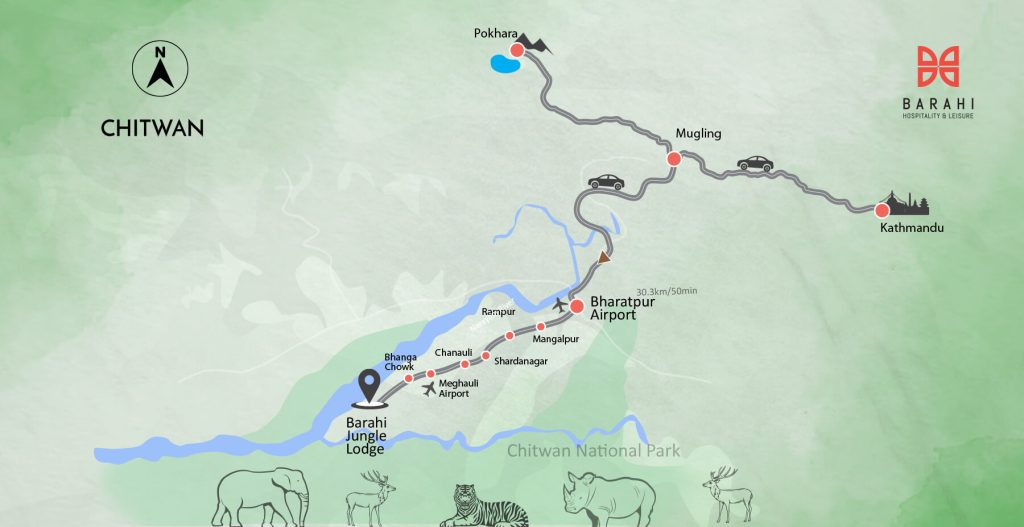
Strategically located in the subtropical inner Terai of south-central Nepal, Chitwan National Park serves as a vital green anchor for the country. It is positioned roughly 150 kilometers southwest of Kathmandu, nestled within the Chitwan, Nawalparasi, Parsa, and Makwanpur districts. Its geographic importance is defined by its border proximity to India, where the park shares a seamless boundary with the Valmiki Tiger Reserve in Bihar. This connection makes it a core component of the Terai Arc Landscape, a massive conservation corridor designed to protect the natural movement of wildlife across two nations.
Navigating to this wilderness is straightforward, as the park is well-connected to Nepal’s major hubs. Most travelers arrive via Bharatpur, the nearest major city and domestic airport, which is just a short drive from the park’s main gates. From there, the vibrant tourist hub of Sauraha acts as the primary gateway for safaris and river excursions.
Entry Permits & Park Fees
To support the park’s conservation and anti-poaching efforts, all visitors are required to pay a daily entry fee. Permits are valid for a single entry and can be obtained at the Sauraha Entry Station or the Park Headquarters near Kasara.
Current Daily Rates (2026):
- Foreign Nationals: NPR 2,000 (approx. $15)
- SAARC Nationals: NPR 1,000
- Nepali Citizens: NPR 150
- Children (Below 10 years): Free
Best Time to Visit
Timing your trip to Chitwan can significantly change your experience, as the landscape shifts from golden and dry to a lush, green sea depending on the season.
- October to March (The Peak Season): This is widely considered the best time to visit. The weather is dry and pleasant, with clear skies and comfortable temperatures.
- Dry Season (March to May): As the heat rises before the monsoon, wildlife spotting actually improves. Tigers and sloth bears frequently venture out to dwindling waterholes, and the tall elephant grass is often cut, making it much easier to track big game.
- Winter Bird Migration: Between November and February, the park becomes a haven for over 160 species of migratory birds arriving from Siberia and beyond, joining the resident populations along the riverbanks.
- The Monsoon (June to September): While the park is stunningly lush during the rains, this is the most challenging time to visit. Many jungle tracks become muddy and impassable, and certain activities like jeep safaris are often restricted for safety.
Why Chitwan Is a Conservation Success Story
Chitwan is more than just a destination; it is a global blueprint for how to bring a landscape back from the edge. Its success is rooted in a “security and community” approach that has turned the tide for some of the world’s most endangered species.
Rhino Population Recovery
In the 1960s, rhino numbers in Chitwan plummeted to fewer than 100. Through aggressive anti-poaching measures and habitat management, the population has surged to over 750 individuals, making it the second-largest population of Greater one-horned rhinos in the world.
Tiger Census Achievements
Nepal was the first country to double its wild tiger population, and Chitwan is at the center of this feat. The most recent census recorded 128 adult tigers within the park, a testament to the healthy prey base and the effectiveness of protected corridors.
Buffer Zone Community Programs
A key secret to Chitwan’s success is that it gives back. Between 30% and 50% of the park’s revenue is funneled directly into “Buffer Zone” communities. This money funds local schools, healthcare, and infrastructure, turning potential poachers into passionate protectors.
Sustainable Ecotourism Model
By focusing on high-value, low-impact tourism, Chitwan has created a self-sustaining economy. The revenue from visitors supports the salaries of hundreds of rangers and naturalists, ensuring that the park’s protection isn’t dependent on outside aid alone.
IUCN Red List Species Protection
The park provides a critical sanctuary for species listed as vulnerable or endangered on the IUCN Red List. From the Gharial crocodile breeding centers to the protection of wild water buffalo and Sloth bears, Chitwan acts as a high-security vault for the planet’s biodiversity.
Frequently Asked Questions
When was Chitwan National Park established in the Nepali date?
Chitwan was officially established in 2030 B.S. (September 1973), making it Nepal’s very first national park.
When was Chitwan declared a UNESCO World Heritage Site?
The park received its UNESCO World Heritage status in 1984, recognized for its unique ecosystems and critical role in protecting endangered species.
Which rare animal is most famous in Chitwan?
While the Bengal tiger is a major draw, the park is most famous for the Greater one-horned rhinoceros. Chitwan is one of the last places on earth where you can see these prehistoric giants thriving in the wild.
Which Indian tiger reserve is adjacent to Chitwan?
Chitwan shares a porous southern border with the Valmiki Tiger Reserve in Bihar, India. Together, they form a massive transboundary landscape that allows wildlife to migrate freely between the two countries.
Conclusion: A Shared Wildlife Treasure of South Asia
Chitwan is far more than a park; it is a global success story where man-made borders fade into ancient wildlife corridors. By bridging the gap between Nepal and India, it has become a vital lifeline for the survival of the Bengal tiger and the one-horned rhino.
With its unique mix of world-class safaris, deep-rooted Tharu culture, and legendary conservation wins, Chitwan remains one of Asia’s premier wild destinations. It is a place where the mountains meet the plains, proving that when we protect the land, the wild always finds a way to thrive.
Plan Your Adventure: You can experience all of these curated activities and expert-led excursions while staying at the luxurious Barahi Jungle Lodge, which offers a perfect blend of comfort and wild exploration.